In today’s hyper-connected business world, choosing the right CRM isn’t just smart—it’s essential. Discover the top cloud-based CRM platforms that are redefining customer relationships, boosting sales, and streamlining operations with unmatched power and precision.



Top Cloud-Based CRM Platforms: Why They Dominate Modern Business

The shift from on-premise to cloud-based CRM systems has been nothing short of revolutionary. These platforms offer businesses of all sizes the agility, scalability, and real-time data access needed to thrive in competitive markets. Unlike traditional software, cloud-based CRMs eliminate the need for costly hardware, complex installations, and manual updates.
With a cloud CRM, your team can access critical customer data from anywhere, on any device, ensuring seamless collaboration across departments and time zones. This flexibility is especially vital in an era where remote work and digital customer engagement are the norm. According to Gartner, over 85% of customer interactions will be managed without human involvement by 2025, making automation and AI-powered insights crucial.
Scalability and Cost Efficiency
One of the most compelling advantages of cloud-based CRM platforms is their scalability. Whether you’re a startup with five employees or a multinational corporation, these systems grow with you. You only pay for what you use, typically through a subscription model, which reduces upfront capital expenditure.
- No need for physical servers or IT maintenance teams
- Instant upgrades and security patches rolled out automatically
- Flexible pricing tiers based on user count and feature needs
This cost-effective model allows small businesses to leverage enterprise-grade tools without the enterprise price tag.
Real-Time Data Access and Collaboration
Cloud CRMs centralize customer information—contact details, interaction history, sales pipelines, and support tickets—into a single, unified platform. This real-time visibility ensures that sales, marketing, and customer service teams are always on the same page.
“The ability to access customer data in real time has reduced our response time by 60% and increased customer satisfaction scores significantly.” — Sarah Lin, Customer Success Manager at TechFlow Inc.
Teams can collaborate across departments, assign tasks, set reminders, and track progress—all within the CRM interface. This level of integration minimizes data silos and enhances cross-functional efficiency.
Top Cloud-Based CRM Platforms: The 7 Market Leaders
With dozens of CRM solutions available, selecting the right one can be overwhelming. To simplify your decision, we’ve analyzed the top cloud-based CRM platforms based on features, usability, integration capabilities, pricing, and customer support. These seven leaders consistently rank at the top in industry reports from Forrester and Gartner Peer Insights.
1. Salesforce Sales Cloud
Salesforce remains the undisputed leader in the CRM space. Its Sales Cloud platform offers a comprehensive suite of tools for sales automation, lead management, forecasting, and analytics. With a robust AppExchange ecosystem of over 3,000 integrations, Salesforce can be customized to fit virtually any business model.
- AI-powered insights via Einstein Analytics
- Advanced workflow automation and lead scoring
- Mobile app with full functionality
Salesforce’s strength lies in its depth of features and its ability to scale across global enterprises. However, its complexity can be a barrier for small teams without dedicated IT support.
2. HubSpot CRM
HubSpot CRM stands out for its user-friendly interface and free tier that includes core CRM functionalities. It’s particularly popular among small to mid-sized businesses and startups due to its intuitive design and seamless integration with marketing, sales, and service hubs.
- Free plan with contact management, email tracking, and deal pipelines
- Drag-and-drop workflow builder
- Native integration with Gmail and Outlook
While the free version is powerful, advanced features like custom reporting and automation require paid upgrades. Still, HubSpot’s ecosystem makes it one of the most versatile top cloud-based CRM platforms for growth-oriented companies.
3. Microsoft Dynamics 365
For organizations already embedded in the Microsoft ecosystem, Dynamics 365 offers a seamless blend of CRM and ERP functionalities. It integrates effortlessly with Office 365, Teams, and Azure, making it ideal for enterprises seeking end-to-end business process automation.
- Deep integration with Microsoft Outlook and Excel
- AI-driven sales insights and customer service automation
- Flexible deployment options (cloud, hybrid, on-premise)
Dynamics 365 is particularly strong in industries like manufacturing, retail, and professional services. However, its pricing can be complex, and implementation often requires third-party consultants.
Top Cloud-Based CRM Platforms: Feature Comparison
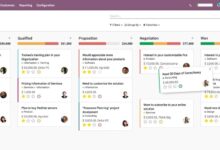
When evaluating the best CRM for your business, it’s crucial to compare key features side by side. The following table outlines the core capabilities of the top platforms discussed, helping you identify which aligns best with your operational needs.
Sales Automation and Lead Management
Effective lead tracking and sales pipeline management are the backbone of any CRM. The top cloud-based CRM platforms offer advanced automation to reduce manual tasks and improve conversion rates.
- Salesforce: Offers lead scoring, assignment rules, and opportunity tracking with predictive forecasting.
- HubSpot: Provides visual deal pipelines, email sequencing, and meeting scheduling tools.
- Dynamics 365: Features AI-powered recommendations and relationship analytics.
These tools help sales teams prioritize high-value leads and close deals faster.
Marketing Integration and Campaign Management
A CRM isn’t just for sales—it’s a central hub for marketing efforts too. Platforms like HubSpot and Salesforce Marketing Cloud enable businesses to design, execute, and measure multi-channel campaigns directly within the CRM.
- Email marketing automation with A/B testing
- Landing page and form builders
- Customer journey mapping and segmentation
For example, HubSpot’s Marketing Hub allows users to create personalized campaigns based on user behavior, significantly improving engagement rates.
Top Cloud-Based CRM Platforms – Top Cloud-Based CRM Platforms menjadi aspek penting yang dibahas di sini.
Customer Service and Support Tools
Exceptional customer service is a key differentiator. The best top cloud-based CRM platforms include built-in service modules with ticketing systems, knowledge bases, and live chat support.
- Salesforce Service Cloud offers AI-powered chatbots and case management.
- HubSpot Service Hub includes customer feedback surveys and ticketing workflows.
- Zoho CRM provides multilingual support and social media integration.
These features ensure that customer inquiries are resolved quickly and consistently, enhancing loyalty and retention.
Top Cloud-Based CRM Platforms: Pricing and Value Analysis
Cost is a critical factor when selecting a CRM. While some platforms offer free tiers, others charge premium prices for enterprise-grade features. Understanding the pricing structure helps you assess long-term value.
Free and Entry-Level Options
Several top cloud-based CRM platforms offer free versions that are surprisingly powerful for small teams.
- HubSpot CRM: Free forever plan includes contact, deal, and task management.
- Zoho CRM: Free for up to three users with basic automation.
- Insightly: Free tier with project and contact management.
These options are ideal for startups testing CRM functionality before committing financially.
Premium and Enterprise Tiers
As businesses grow, they often require advanced features like custom reporting, API access, and AI analytics. Premium plans vary significantly in cost and capability.
- Salesforce Sales Cloud: Starts at $25/user/month (Essential) up to $300/user/month (Unlimited).
- Microsoft Dynamics 365 Sales: Priced at $65/user/month for Professional edition.
- Oracle CX Sales: Starts at $80/user/month with AI-driven insights.
While these prices may seem high, the ROI from improved sales efficiency and customer retention often justifies the investment.
Top Cloud-Based CRM Platforms: Integration Capabilities
No CRM operates in isolation. The ability to integrate with other business tools—email, calendars, marketing automation, ERP systems, and e-commerce platforms—is essential for maximizing productivity.
Native Integrations vs. Third-Party Apps
Some platforms offer deep native integrations, while others rely on app marketplaces.
- Salesforce AppExchange: Over 3,000 apps for accounting, marketing, and analytics.
- HubSpot Integration Marketplace: 1,000+ integrations including Shopify, Zoom, and Slack.
- Dynamics 365: Native sync with Microsoft Power BI, Teams, and Azure services.
These ecosystems allow businesses to build a fully connected tech stack without custom coding.
API Access and Custom Development
For companies with unique workflows, API access enables custom integrations and automation.
- Salesforce offers REST and SOAP APIs with extensive documentation.
- HubSpot provides a developer portal with SDKs and webhooks.
- Zoho CRM supports custom functions and scripting via Deluge.
Open APIs ensure that your CRM can evolve with your business needs.
Top Cloud-Based CRM Platforms: User Experience and Adoption
Even the most powerful CRM will fail if users don’t adopt it. A clean, intuitive interface and mobile accessibility are critical for driving user engagement.
Interface Design and Navigation
Modern CRMs prioritize user experience with drag-and-drop builders, customizable dashboards, and role-based views.
- HubSpot is praised for its minimalist design and ease of onboarding.
- Salesforce has improved its UX with Lightning Experience, though it still has a learning curve.
- Pipedrive focuses on visual sales pipelines, making it ideal for sales-first teams.
A well-designed interface reduces training time and increases daily usage.
Mobile App Performance
With over 60% of sales professionals working remotely, mobile CRM access is non-negotiable.
- All major platforms offer iOS and Android apps.
- Features include offline access, voice-to-text notes, and GPS check-ins.
- HubSpot and Salesforce apps consistently rank above 4.5 stars on app stores.
Mobile functionality ensures that field sales teams stay connected and productive.
Top Cloud-Based CRM Platforms: Security and Compliance
Storing sensitive customer data in the cloud raises legitimate security concerns. The leading top cloud-based CRM platforms invest heavily in data protection and regulatory compliance.
Data Encryption and Access Controls
Top platforms use end-to-end encryption, multi-factor authentication, and role-based permissions to safeguard information.
Top Cloud-Based CRM Platforms – Top Cloud-Based CRM Platforms menjadi aspek penting yang dibahas di sini.
- Salesforce uses AES-256 encryption for data at rest and TLS 1.2+ for data in transit.
- Microsoft Dynamics 365 leverages Azure’s advanced threat detection and identity management.
- HubSpot complies with GDPR, CCPA, and SOC 2 standards.
These measures ensure that only authorized users can access sensitive data.
Compliance with Global Regulations
For businesses operating internationally, compliance with data privacy laws is mandatory.
- GDPR (General Data Protection Regulation) in Europe
- CCPA (California Consumer Privacy Act) in the U.S.
- PIPEDA in Canada
Platforms like Salesforce and HubSpot provide built-in tools for data subject requests, consent management, and audit trails, simplifying compliance efforts.
Top Cloud-Based CRM Platforms: Future Trends and AI Integration
The future of CRM is intelligent, predictive, and hyper-personalized. AI and machine learning are transforming how businesses interact with customers.
AI-Powered Sales Forecasting
Modern CRMs use AI to analyze historical data and predict future sales trends.
- Salesforce Einstein forecasts deal closures with 85% accuracy.
- HubSpot’s predictive lead scoring identifies high-intent prospects.
- Microsoft Relationship Sales uses AI to recommend next-best actions.
These insights help sales teams focus on the right opportunities at the right time.
Chatbots and Virtual Assistants
AI-driven chatbots handle routine customer inquiries 24/7, freeing up human agents for complex issues.
- Salesforce Einstein Bots resolve up to 40% of support tickets without human intervention.
- HubSpot’s conversational bots qualify leads and book meetings.
- Zoho Zia offers voice-enabled assistance within the CRM.
These tools improve response times and reduce operational costs.
What are the best cloud-based CRM platforms for small businesses?
For small businesses, HubSpot CRM and Zoho CRM are excellent choices due to their free tiers, ease of use, and strong integration capabilities. Both platforms offer scalable plans that grow with your business.
How do cloud-based CRMs improve sales productivity?
Cloud-based CRMs automate repetitive tasks like data entry, lead assignment, and follow-up reminders. They provide real-time insights into sales pipelines, enable better team collaboration, and integrate with communication tools, significantly boosting efficiency.
Are cloud CRM systems secure?
Yes, leading cloud CRM platforms employ enterprise-grade security measures including data encryption, multi-factor authentication, and compliance with global privacy regulations like GDPR and CCPA. They often provide better security than on-premise systems due to continuous monitoring and updates.
Can I integrate my CRM with email and calendar tools?
Absolutely. Most top cloud-based CRM platforms offer native integration with Gmail, Outlook, Google Calendar, and Microsoft Exchange. This allows for automatic logging of emails, calendar syncing, and meeting scheduling directly within the CRM.
What is the average cost of a cloud CRM?
Prices vary widely. Free plans are available from HubSpot and Zoho. Paid plans typically range from $12 to $300 per user per month, depending on features and scalability. Most businesses find effective solutions in the $25–$75/user/month range.
Choosing the right CRM is a strategic decision that impacts every customer-facing function. The top cloud-based CRM platforms—Salesforce, HubSpot, Microsoft Dynamics 365, Zoho, Pipedrive, Oracle CX, and SAP Sales Cloud—offer powerful tools to drive growth, enhance customer experiences, and streamline operations. By evaluating your business size, budget, integration needs, and long-term goals, you can select a platform that delivers real value. As AI and automation continue to evolve, these systems will become even more intelligent, predictive, and indispensable. Investing in the right CRM today positions your business for success in the digital future.
Top Cloud-Based CRM Platforms – Top Cloud-Based CRM Platforms menjadi aspek penting yang dibahas di sini.
Recommended for you 👇
Further Reading:
