Navigating CRM system pricing can feel like decoding a secret code—expensive, confusing, and full of hidden traps. But what if you could crack the code and find a solution that fits your budget and goals? Let’s demystify the real costs behind CRM systems in 2024.



Understanding CRM System Pricing: The Big Picture

Customer Relationship Management (CRM) systems are no longer luxury tools for enterprise giants. Today, businesses of all sizes rely on CRM platforms to streamline sales, marketing, and customer service. However, one of the biggest hurdles for decision-makers is understanding CRM system pricing. It’s not just about monthly fees—it’s about total cost of ownership, scalability, and long-term value.
What Is CRM System Pricing?
CRM system pricing refers to the cost structure associated with acquiring, implementing, and maintaining a CRM platform. This includes subscription fees, setup costs, customization, training, integration, and ongoing support. Unlike a one-time software purchase, modern CRM systems—especially cloud-based ones—operate on a recurring revenue model.
According to Gartner, the global CRM software market is projected to exceed $80 billion by 2025, driven by digital transformation and customer-centric strategies. This growth has led to a wide variety of pricing models, making it both easier and harder for businesses to choose the right fit.
Why CRM Pricing Confuses Buyers
One major reason CRM system pricing confuses buyers is the lack of transparency. Vendors often advertise low entry-level prices while hiding additional costs in add-ons, user tiers, or premium features. For example, a platform might charge $10/user/month but require $50/user/month for essential automation tools.
- Hidden integration fees
- Costs for data migration
- Training and onboarding expenses
- Customization and API access charges
“The cheapest CRM isn’t always the cheapest in the long run.” — CRM Industry Analyst, 2023
Types of CRM Systems and Their Pricing Models
Not all CRMs are created equal—and neither are their pricing structures. The type of CRM you choose directly impacts how you’ll pay for it. Let’s break down the main categories and their associated CRM system pricing models.
Operational CRM: Sales, Marketing, and Service
Operational CRMs focus on automating core customer-facing processes. These include lead management, sales pipelines, email marketing, and customer support workflows. Pricing for operational CRMs is typically per user per month, with tiered feature access.
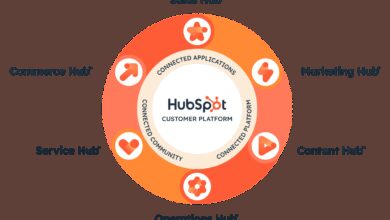
Examples include Salesforce Sales Cloud and HubSpot CRM. Entry-level plans can start as low as $0 (HubSpot’s free tier), while enterprise versions can exceed $300/user/month. The key is understanding which features you actually need. Do you require AI-powered forecasting? Advanced segmentation? These features dramatically affect CRM system pricing.
Analytical CRM: Data-Driven Insights
Analytical CRMs are designed to process customer data and generate insights. They use reporting, dashboards, and predictive analytics to help businesses make smarter decisions. These systems are often integrated into larger platforms or offered as add-ons.
Pricing for analytical CRM features is usually bundled into higher-tier plans. For instance, Microsoft Dynamics 365 offers basic reporting in its standard plan but charges extra for advanced analytics modules. Businesses that rely heavily on data may find themselves upgrading faster than expected, increasing overall CRM system pricing.
Collaborative CRM: Connecting Teams and Channels
Collaborative CRMs focus on improving communication between departments and customer touchpoints. They integrate email, phone, chat, and social media into a unified interface. These systems are ideal for companies with distributed teams or omnichannel customer engagement strategies.
Pricing here often depends on the number of communication channels supported. For example, Zoho CRM includes basic email and phone integration in its standard plan but charges extra for social media monitoring or live chat. This modular pricing can lead to unexpected costs if not carefully planned.
Key Factors That Influence CRM System Pricing
Understanding the variables that affect CRM system pricing is crucial for making a smart investment. It’s not just about how many users you have—it’s about how you plan to use the system.
Number of Users and Licensing Models
Most CRM vendors use a per-user pricing model. The more users you add, the higher your monthly bill. However, some platforms offer team-based or enterprise licensing that can reduce the per-user cost at scale.
For example, Salesforce charges $25/user/month for its Essentials plan but drops the per-user cost significantly when you purchase hundreds of licenses. On the flip side, small businesses might find this model prohibitive if they only need a few seats.
Alternative models include:
- Flat-rate pricing: One price for unlimited users (e.g., Freshsales)
- Freemium: Free basic version with paid upgrades (e.g., HubSpot)
- Usage-based: Pay based on activity (e.g., emails sent, contacts stored)
Feature Tiers and Module Add-Ons
CRMs often segment features into tiers: Basic, Professional, Enterprise. Each tier unlocks more functionality, but also increases CRM system pricing. Common differentiators include:
- Automation rules
- Advanced reporting
- Custom workflows
- API access
- AI-powered insights
Additionally, many vendors offer modular add-ons. For example, Pipedrive’s Web Forms add-on costs extra, even though it’s essential for lead capture. These add-ons can inflate your initial budget by 50% or more.
Deployment Type: Cloud vs. On-Premise
The deployment model significantly impacts CRM system pricing. Cloud-based CRMs (SaaS) are subscription-based and require minimal upfront investment. On-premise CRMs, however, involve large initial costs for software licenses, servers, and IT infrastructure.
While cloud CRM pricing is predictable (e.g., $50/user/month), on-premise solutions can cost tens of thousands upfront. Maintenance, upgrades, and security also fall on the business, adding to long-term expenses. According to IDC, over 70% of new CRM deployments in 2023 were cloud-based, reflecting a clear market shift.
Hidden Costs in CRM System Pricing You Can’t Ignore
The advertised price is rarely the final price. Many businesses underestimate the true cost of a CRM because they overlook hidden fees that accumulate over time.
Implementation and Setup Fees
Even with cloud CRMs, setup isn’t always free. Vendors like Salesforce and Microsoft Dynamics often charge implementation fees ranging from $5,000 to $50,000, depending on complexity. These fees cover data migration, system configuration, and workflow design.
Some companies opt for self-implementation to save money, but this can lead to poor adoption and wasted time. A study by Nucleus Research found that businesses that invest in professional implementation see a 3x faster ROI.
Training and Onboarding Expenses
What good is a CRM if your team doesn’t use it? Training is a critical but often overlooked cost. Internal training sessions, external consultants, or online courses all add up.
For example, Salesforce offers Trailhead for free learning, but certified training programs can cost $1,000+ per employee. Multiply that by your team size, and you’re looking at a significant investment.
Integration and API Costs
CRMs don’t work in isolation. You’ll likely need to connect them to your email, calendar, ERP, or e-commerce platform. While basic integrations may be free, advanced or custom integrations often come with fees.
Some platforms charge per API call or limit the number of integrations in lower tiers. For instance, Zoho CRM restricts API access in its free plan, forcing upgrades for automation workflows. These limitations can silently inflate your CRM system pricing over time.
Top CRM Platforms and Their Real-World Pricing (2024)
To help you compare, here’s a breakdown of the most popular CRM platforms and their actual pricing—including hidden costs.
Salesforce: The Enterprise Leader
Salesforce dominates the CRM market with powerful features and deep customization. But its CRM system pricing is complex and often expensive.
- Salesforce Essentials: $25/user/month (basic CRM)
- Professional: $75/user/month
- Enterprise: $150/user/month
- Unlimited: $300/user/month
Additional costs: Implementation ($10k+), training ($1k+/user), and add-ons like Einstein AI ($50+/user/month). Total first-year cost for 10 users can exceed $25,000.
HubSpot CRM: The SMB Favorite
HubSpot is known for its user-friendly interface and generous free plan. Its CRM system pricing is transparent and scalable.
- Free CRM: $0 (unlimited users, basic features)
- Starter: $20/month (billed annually)
- Professional: $800/month (marketing hub)
- Enterprise: $3,200/month
HubSpot bundles CRM, marketing, sales, and service tools. While the free CRM is powerful, advanced automation and reporting require upgrading to paid tiers. For a small team, the total cost can still be under $1,000/year—making it one of the most cost-effective options.
Microsoft Dynamics 365: The Integrated Powerhouse
Dynamics 365 integrates seamlessly with Microsoft 365 and Azure, making it ideal for organizations already in the Microsoft ecosystem.
- Sales Professional: $65/user/month
- Customer Service: $95/user/month
- Enterprise Edition: $225/user/month
Implementation costs are high, often requiring third-party partners. However, long-term ROI is strong for enterprises needing deep integration with Office, Teams, and Power BI.
How to Choose the Right CRM Based on Pricing and Value
Choosing a CRM isn’t just about finding the cheapest option—it’s about maximizing value. A $10/user/month CRM that doesn’t meet your needs is more expensive than a $50/user/month system that drives real results.
Assess Your Business Needs First
Before looking at prices, define your goals. Are you trying to improve lead conversion? Automate follow-ups? Enhance customer support? Your use case should dictate the features you need.
Create a checklist:
- Number of users
- Required integrations
- Automation level
- Reporting needs
- Mobile access
This prevents you from paying for features you won’t use—or worse, realizing too late that you’re missing critical functionality.
Calculate Total Cost of Ownership (TCO)
TCO includes all direct and indirect costs over a 3-5 year period. Use this formula:
TCO = (Subscription × Users × Months) + Implementation + Training + Integrations + Maintenance + Downtime Cost
For example, a $50/user/month CRM for 10 users over 3 years:
- Subscriptions: $50 × 10 × 36 = $18,000
- Implementation: $5,000
- Training: $3,000
- Integrations: $2,000
- Maintenance: $1,000
- Total TCO: $29,000
Compare this across vendors to make an apples-to-apples decision.
Negotiate and Leverage Free Trials
Never buy a CRM without testing it. Most platforms offer 14–30 day free trials. Use this time to:
- Import real data
- Test workflows
- Train your team
- Check integration performance
You can also negotiate pricing, especially for annual contracts or large user counts. Salesforce, for instance, often offers 10–20% discounts for upfront annual payments.
Future Trends in CRM System Pricing (2024 and Beyond)
The CRM landscape is evolving fast. New technologies and business models are reshaping how CRM system pricing works.
Rise of AI-Powered CRM and Its Cost Impact
AI is no longer a luxury—it’s becoming a standard feature. From lead scoring to chatbots, AI enhances efficiency but comes at a cost. Most vendors charge extra for AI modules.
Salesforce’s Einstein AI adds $25–$50/user/month. HubSpot’s AI tools are included in higher tiers. As AI becomes more embedded, expect base prices to rise, but ROI to improve significantly.
Subscription Fatigue and the Push for Value-Based Pricing
Businesses are tired of endless SaaS subscriptions. In response, some CRM vendors are experimenting with value-based pricing—charging based on outcomes like revenue generated or deals closed.
While still rare, this model could disrupt traditional CRM system pricing. Imagine paying 1% of the revenue your CRM helps generate, rather than a flat monthly fee. This aligns vendor and customer success.
Open Source and Low-Cost Alternatives Gaining Ground
Open-source CRMs like SuiteCRM and Odoo offer full control and lower costs. While they require more technical expertise, they eliminate recurring license fees.
For tech-savvy businesses, this can slash CRM system pricing by 50% or more. However, the trade-off is time and resources spent on maintenance and customization.
What is the average cost of a CRM system?
The average cost of a CRM system ranges from $12 to $250 per user per month. Small businesses can start with free or low-cost options like HubSpot CRM ($0) or Zoho CRM ($14/user/month), while enterprise solutions like Salesforce can exceed $300/user/month. Additional costs for implementation, training, and integrations can significantly increase the total price.
Is there a CRM with no hidden fees?
While no CRM is entirely free of potential extra costs, platforms like HubSpot and Freshsales are known for transparent pricing. HubSpot offers a free CRM with no user limits, and Freshsales uses a flat-rate model with unlimited users. Always review the fine print and ask vendors about implementation, API, and integration fees before committing.
Can I negotiate CRM pricing?
Yes, CRM pricing is often negotiable, especially for annual contracts, multi-year commitments, or large user counts. Vendors like Salesforce, Microsoft, and Oracle are known to offer discounts of 10–30% for upfront payments. Always ask for a custom quote and leverage competitor pricing during negotiations.
Which CRM offers the best value for small businesses?
HubSpot CRM and Zoho CRM are widely regarded as the best value for small businesses. HubSpot’s free tier is powerful and scalable, while Zoho CRM offers robust features starting at $14/user/month. Both platforms provide excellent support, integrations, and user-friendly interfaces without breaking the bank.
How much does Salesforce really cost?
Salesforce’s advertised prices start at $25/user/month for Essentials, but real-world costs are much higher. With required add-ons, implementation, and training, the total cost for a small team can easily exceed $10,000 in the first year. For mid-sized businesses, annual costs often range from $50,000 to $200,000, depending on customization and user count.
CRM system pricing is more than just a monthly fee—it’s a strategic investment in your business’s growth. By understanding the different models, hidden costs, and long-term value, you can choose a solution that delivers real ROI. Whether you’re a startup or an enterprise, the key is to align your CRM choice with your goals, not just your budget. The right CRM doesn’t just save money—it makes money.
CRM system pricing – CRM system pricing menjadi aspek penting yang dibahas di sini.
Further Reading: